Contractual scenarios
The Njema assessment can be offered in various contractual scenarios to suit different business needs and project requirements. Here are some examples of potential scenarios:
Basic
A unique service. It provides a comprehensive overview of all entities in a very short time, presented as a report (PDF and CSV files). It verifies the consistency of the entire application landscape and highlights specific incidents that require special attention in later project phases.
Extended
The results from the „Basic“ scenario are imported into a graphical database (Neo4J), including links and properties of all entities in the application landscape. The output consists of graphs, reports, and exported data. This approach should definitely be carried out before larger projects.
Permanent
The functionality of the Njema Assessment, together with the customer’s current software version, is provided on a dedicated server. The customer has read access to the entity repository and can perform queries on the graphical database. This approach is often used for project support and general quality assurance.
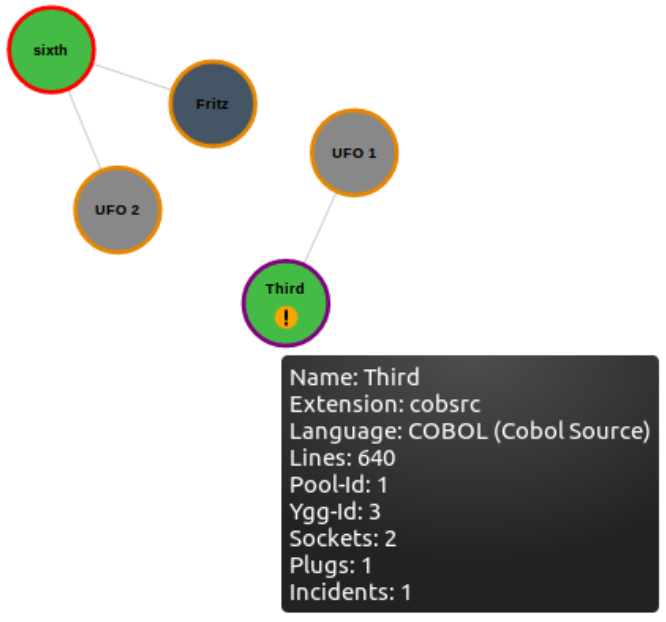
Njema reads the complete set of source code into the repository and performs the analysis run. For example, such a run takes approximately 4 hours for 50 million lines. Typically, the first run reveals missing entities or other areas requiring clarification. The missing code is then provided and imported. However, if an entity cannot be obtained, its property is set to the status ALIEN or KNOWN ALIEN, and the process is repeated. Depending on the situation, this procedure can take several weeks. The customer receives a comprehensive report as a PDF. The results are also provided as a CSV file. The report further includes the following information:
- Which entities are used (COPY, INCLUDE, C headers, procedures, etc.)?
- Which entities are missing, which are superfluous („dead“)
- Special analyses of problem or error classes as preparation for code transformation.
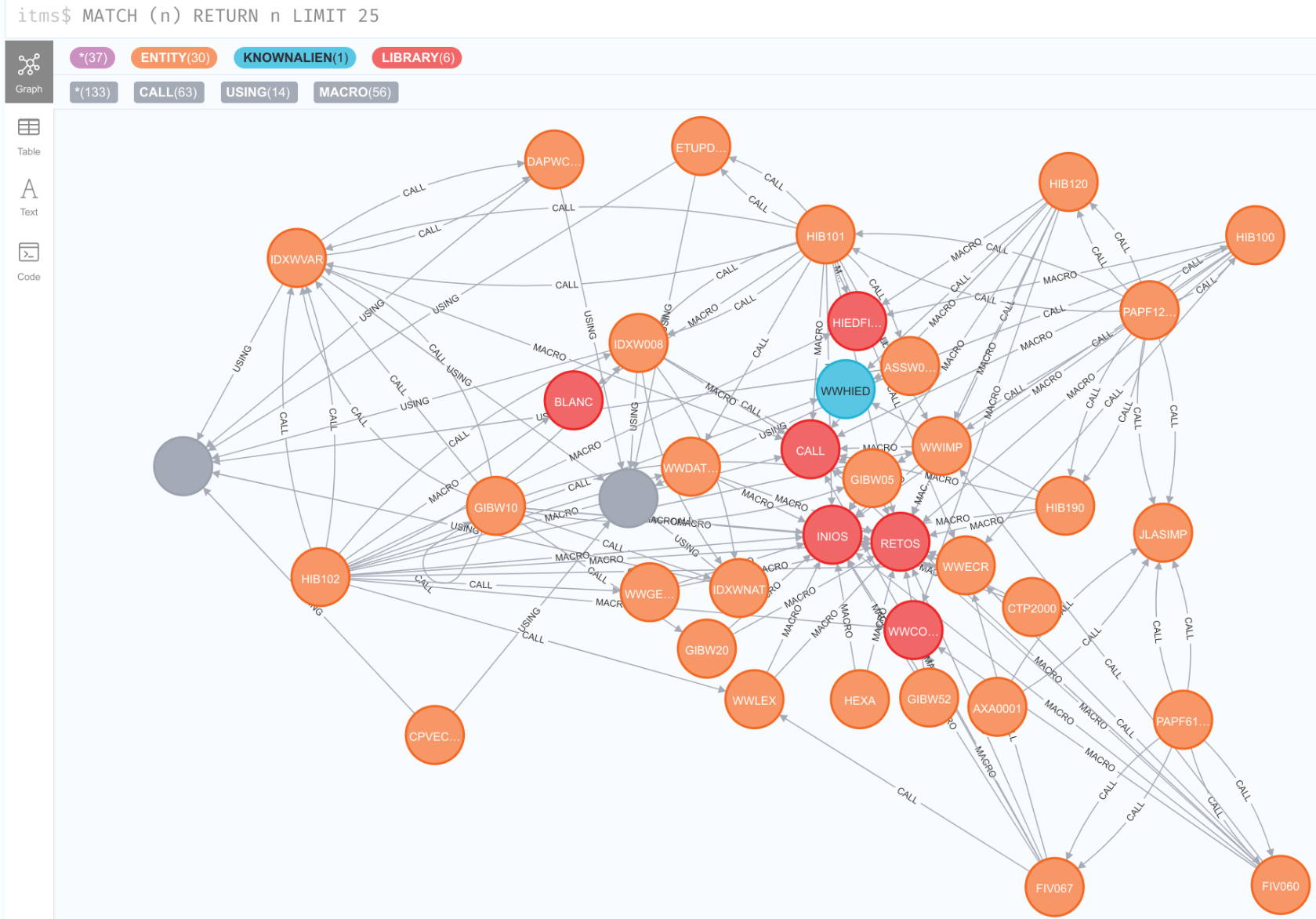
The Extended scenario includes all the features from the Basic scenario. Additionally, an export is generated from the Njema database and imported into Neo4J. Neo4J is a system for visualizing graphs, i.e., objects and their relationships. The results include a detailed quantitative and qualitative analysis of the code.
- Many object properties such as type, language, pool membership
- Type of link to other objects, e.g. via CALL, ENTRY, EXEC, COPY, READ, WRITE, etc.
- Link hierarchies, determined via queries to Neo4J
- Identifying access rights and access types to files and databases
- Qualitative characteristics of the code: number of jump instructions, redefinitions, RENAMES (Cobol), COPY Book Nesting, ODO (Cobol), Micro Focus Conditional Code, CALL signatures, etc.
The system provided contains a large number of predefined queries, but also allows the formulation of custom queries.